A hands-on workshop at the University of New Haven's Prato Campus brought together students and professionals to examine how satellite imagery, open-source intelligence, and emerging AI technologies are reshaping criminal and cultural heritage investigations.
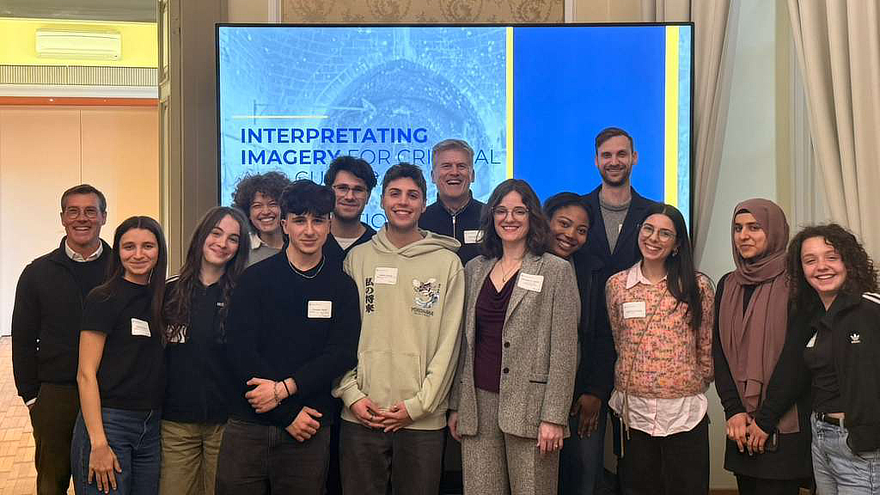
The University of New Haven's welcomed students, researchers, and practitioners from across Italy for an immersive workshop exploring the growing role of imagery in criminal and cultural heritage investigations. Titled "Interpreting Imagery for Criminal and Cultural Heritage Investigations," the workshop introduced participants to the principles of open-source investigations while providing practical experience with satellite imagery and digital evidence.
Led by , associate professor in the Department of Criminal Justice and Criminology, the workshop attracted participants ranging from local Italian high school students and University of New Haven students studying abroad to graduate students and cultural-heritage professionals. The event also featured collaboration with local institutions, including Monash University.
Dr. Fabiani said she envisioned the workshop as an opportunity to showcase the University's international reach while creating meaningful connections between students and professionals.
"I regularly receive requests from my network in Europe to hold workshops, and I thought hosting one on the Prato campus would be an excellent opportunity to raise the University's profile while connecting with my broader professional network," she said.
She added that the Prato Campus offered a unique environment where participants at different stages of their education and careers could learn together.
'People like to trust imagery'
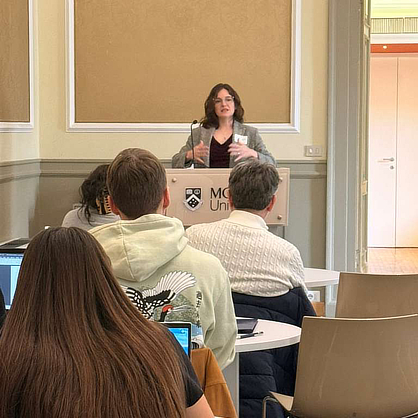
Throughout the workshop, participants learned how to access and interpret satellite imagery, geolocate images using Google Earth Pro, and build evidence packets that could meet legal standards for admissibility in court. The program also introduced attendees to forensic analysis of metadata and demonstrated how investigators verify whether imagery has been manipulated.
Dr. Fabiani said one of the workshop's central themes was encouraging participants to think critically about digital evidence.
"People like to trust imagery, but the reality is that images are easily manipulated," she said. "It's important to learn how to critically interpret and analyze them."
The discussion also explored the rapid advancement of generative artificial intelligence. While investigators have long had methods for detecting traditional image manipulation, Fabiani explained that AI-generated imagery is creating new questions for investigators and the courts.
She emphasized that the best response is to strengthen investigative practices by verifying evidence across multiple sources, carefully evaluating credibility, and communicating transparently about the strength of available evidence.
"Participants were exposed to the possibility of deep-faked imagery and the potential ramifications if manipulated images were mistakenly submitted as evidence," she said.
'Regardless of skill level, you would take away something'
The workshop was intentionally designed to support learners with different levels of experience. Simpler concepts and visual demonstrations helped newer participants build foundational knowledge, while more advanced discussions challenged graduate students and professionals already working in related fields.
Fabiani said bringing together participants with diverse backgrounds created valuable opportunities for everyone involved.
"The younger participants got to hear questions from more advanced students, while the professionals were exposed to new tools and deeper context for issues they were already working on," she said. "The workshop was designed so that regardless of skill level, you would take away something."
student Nessy Cherazard '27 said the workshop successfully combined introductory concepts with practical application.
"I found the workshop to be a really valuable experience because it offered a strong introduction to the basic elements of investigation along with helpful background on cultural property," Cherazard said.
She said the opportunity to work directly with Google Earth and analyze satellite imagery made the experience especially engaging while reinforcing lessons about open-source intelligence, accountability, and the use of imagery in court.
"I left with practical skills and a deeper understanding of cultural crimes and investigations," Cherazard said.
Contact
Get the highlights!
Stay up to date with our weekly e-newsletter, highlighting stories from around the University and media clips featuring our faculty experts.